Free solar panels and $0-down solar offers: compare the contract before you sign.
Solar Tech Advisor helps homeowners understand what ads for free solar panels usually mean, how ownership changes the offer, and which incentive and utility assumptions should be checked before a quote becomes decision-ready.
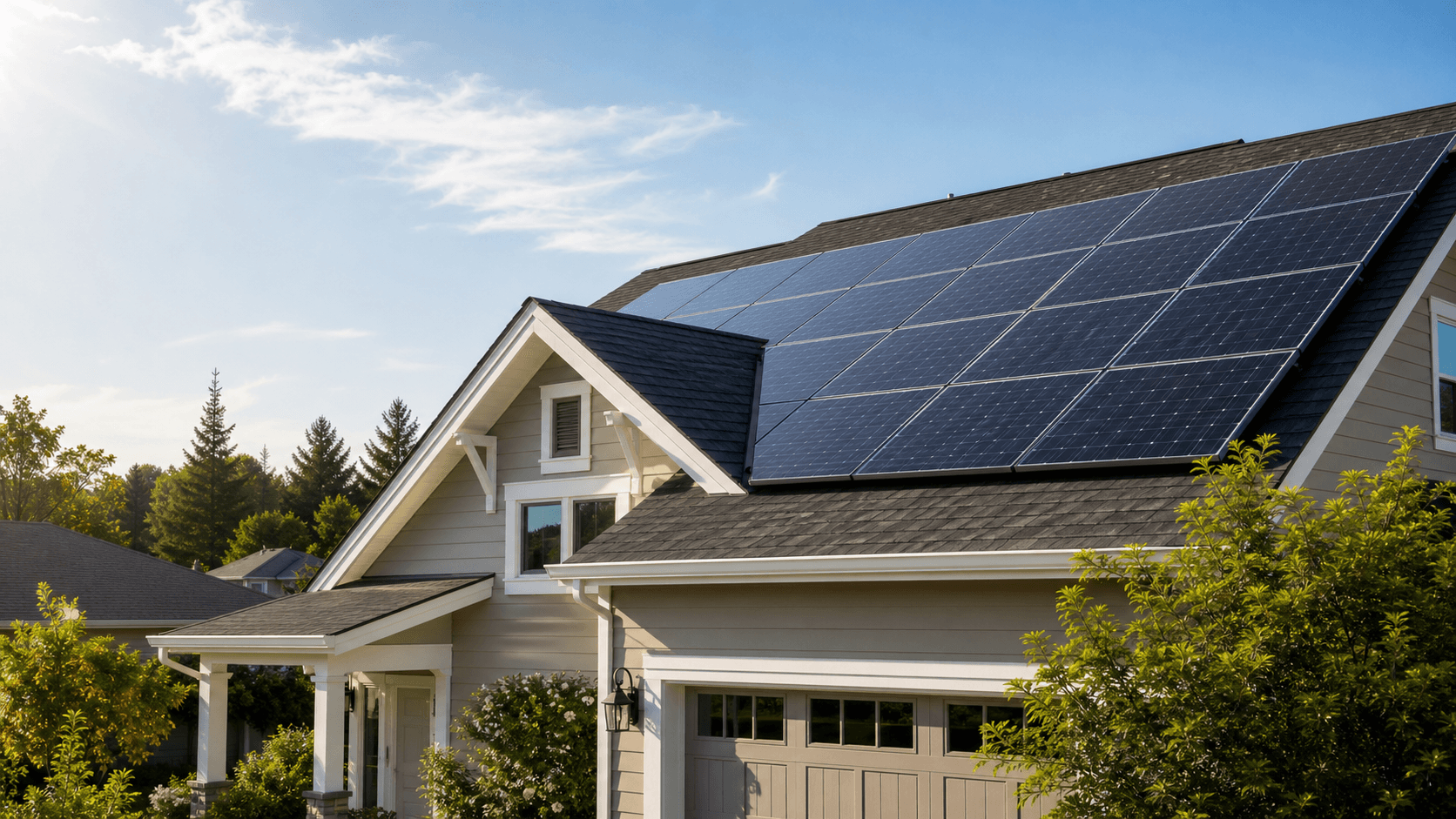
No giveaway assumption
Most offers for free solar panels are really no-upfront-cost offers. The contract still needs ownership, monthly payment, escalator, and transfer checks.
Incentive caution
Incentive language is date-sensitive. Current federal, state, local, utility, and ownership-model rules should be verified before relying on any quote.
Roof and utility fit matter
Sun, shade, roof age, main panel capacity, outage needs, and utility export terms can change whether a $0-down pitch makes sense.
State guide directory
Find free solar panels information by state
Choose a state to compare local $0-down solar offers, incentive checks, utility questions, and city pages for homeowners researching solar quotes.
What to compare
The key question is who owns the system
A no-upfront solar proposal can be structured very differently from another offer with the same headline. The first conversation should focus on contract reality instead of a simple monthly payment claim.
Outage-planning note
Solar panels alone usually shut down during a grid outage unless the system is designed with compatible storage and isolation equipment. If backup power is important, compare critical-load coverage, battery capacity, recharge behavior, and the cost of adding storage.
Potential ownership
Solar loan
The homeowner may own the system and repay financing over time. Ask about dealer fees, APR, lien treatment, tax-credit assumptions, and what happens if the home is sold.
Provider ownership
Lease
A provider may own the system while the homeowner pays a monthly lease. Ask about escalators, maintenance, production guarantees, transfer terms, and buyout rights.
Buy the energy
Power purchase agreement
A provider may own the system and sell the electricity produced under a contracted rate. Ask whether PPAs are available for the address and how rates change over the term.
High-population examples
Popular solar markets to start with
Start with major solar markets, then use the state directory to open the city page for your exact area.
Brooklyn, NY
38 ZIPs - 2,631,396 estimated residents
Philadelphia, PA
46 ZIPs - 1,580,045 estimated residents
Bronx, NY
25 ZIPs - 1,412,082 estimated residents
Orlando, FL
32 ZIPs - 1,092,822 estimated residents
Atlanta, GA
39 ZIPs - 1,047,285 estimated residents
Charlotte, NC
26 ZIPs - 986,604 estimated residents
Columbus, OH
29 ZIPs - 870,535 estimated residents
Tampa, FL
27 ZIPs - 835,973 estimated residents
Solar FAQs
Questions worth answering before a quote
Research guides
Solar incentive and financing guides
Read the practical checks behind $0-down solar, 2026 incentive claims, battery backup, roof readiness, and quote comparison.
Solar Incentives in 2026
2026 solar incentives: federal rules, state programs, utility credits, and $0-down contract checks.
How to Compare Solar Quotes
A practical checklist for comparing system size, production estimates, ownership terms, financing, equipment, and warranties.
Solar Battery Backup With $0-Down Solar
Outage questions, critical loads, battery sizing, time-of-use rates, and contract checks before bundling storage.
Will My Roof Qualify for $0-Down Solar?
How roof age, shade, orientation, slope, structure, and electrical access affect solar quote eligibility.
Government Solar Programs: What Is Real?
How to verify solar program claims, avoid misleading government language, and separate public programs from private financing.
$0-Down Solar Financing: Loan, Lease, or PPA?
How $0-down solar offers work, what fees and escalators to review, and how ownership changes incentives and risk.
Low-Income Solar Programs and Community Solar
How income-qualified solar, community solar, nonprofit programs, and utility offers differ from ordinary free-solar advertising.